Why the Parenting Advice That Worked for Your Friend Isn't Working for You

You did the thing every tired parent does at some point. You watched a friend handle a meltdown, or read a post, or heard a tip from someone in your mom group, and you thought: that's it, that's the answer. You tried it that night. And it did nothing. Maybe it made things worse.
Here's what I want you to know before you add this to the pile of evidence that you're doing something wrong. You're not.
The advice probably worked. For her kid. Not yours. And that's not a small distinction. It's the whole distinction.
Parenting advice is built for an average kid who doesn't exist
Most parenting content is written as if there's one correct way kids process the world, one correct way they recharge, one correct way they make decisions. So the advice gets built around that imaginary average kid. And then it gets handed to you like it should just work, no matter what your actual kid is like.
But your kid isn't an average. Neither are you. You each move through the world in a specific way, and when those two specific ways collide, that's usually where the friction shows up. Not because either of you is doing something wrong. Because nobody ever explained what you were actually looking at.
This is where Human Design comes in, and I want to be clear about what I mean by that, because it's not what most people assume.
I'm not asking you to believe in anything
You don't need to buy into a belief system to get something real out of this. Think of Human Design as a language for describing how a person is energetically built to operate: how they make good decisions, how they take in the world, what actually recharges them versus what drains them. Some kids are built to respond to life as it comes to them. Some are built to initiate. Some need to talk something out before they know what they think. Some need total silence to hear themselves at all.
None of that is a personality quiz. It's a structural difference. And once you can see it, half the fights you've been having start to make a different kind of sense.
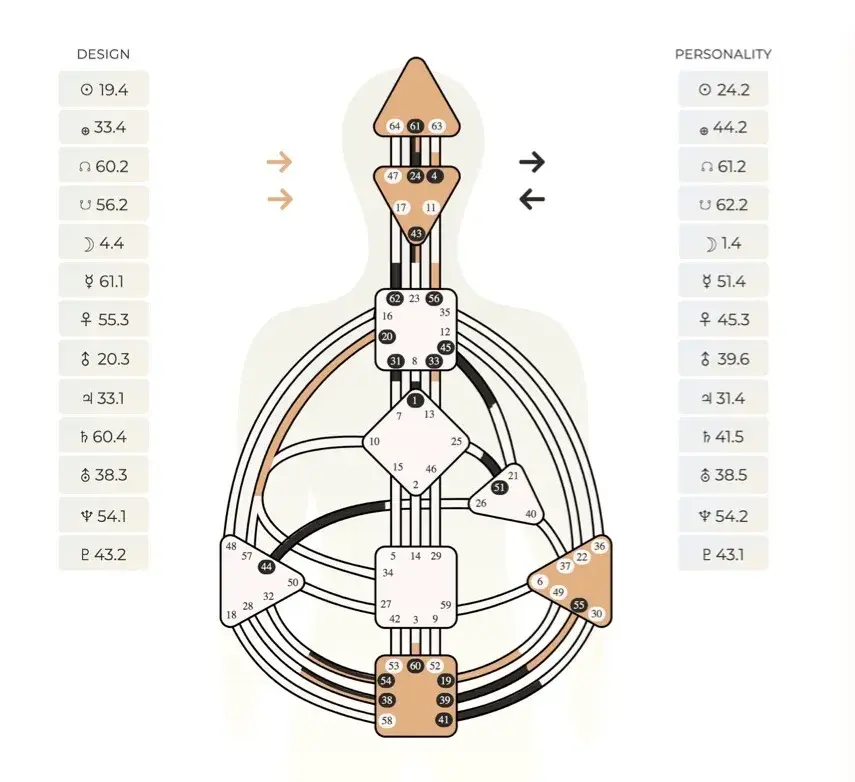
The advice that worked for your friend probably matched her kid's design
Say your friend swears by a "give them a five minute warning before every transition" trick. It worked beautifully for her son. You try it on your daughter and she melts down anyway. It's not that the trick is bad. It's that her son is built to need advance notice to feel steady, and your daughter might be built to respond in the moment, where too much advance warning just gives her more time to spiral.
Same tool. Different design. Different result.
This is why I stopped handing every family the same toolkit a long time ago. I've worked with a Manifestor parent trying to force herself into a Generator's slow-and-steady rhythm because that's what the books told her to do, wondering why she felt like she was failing at her own parenting style. I've worked with a Projector kid getting labeled defiant for pushing back on instructions nobody actually invited him into, when the truth is he was built to need an invitation, not a command. Once the parent could see that, the "defiance" stopped looking like a character problem and started looking like exactly what it was.
What understanding your design actually gives you
This isn't about explaining away hard behavior or letting go of boundaries. It's about knowing what you're actually working with before you pick your approach. A reading gives you language for how you specifically operate under stress, how your child specifically takes in the world, and where the two of you are naturally going to clash simply because you're built differently, not because either of you is doing it wrong.
Parents tell me the same thing after a reading almost every time. It's relief. Not because anything changed overnight, but because they finally have a reason for the friction that isn't "I'm failing" or "my kid is difficult." They have a map instead of a guess.
If you've been collecting parenting advice for months and wondering why none of it sticks, it might not be the advice. It might be that nobody ever showed you the two specific people it needs to work for.
That's what a Human Design reading gives you: a look at your own design, your child's, and the specific places they're going to rub against each other, so you can stop guessing and start working with who you actually have in front of you.


Comments